
Description
GHK-Cu Peptide: A Copper-Binding Compound for Laboratory Research
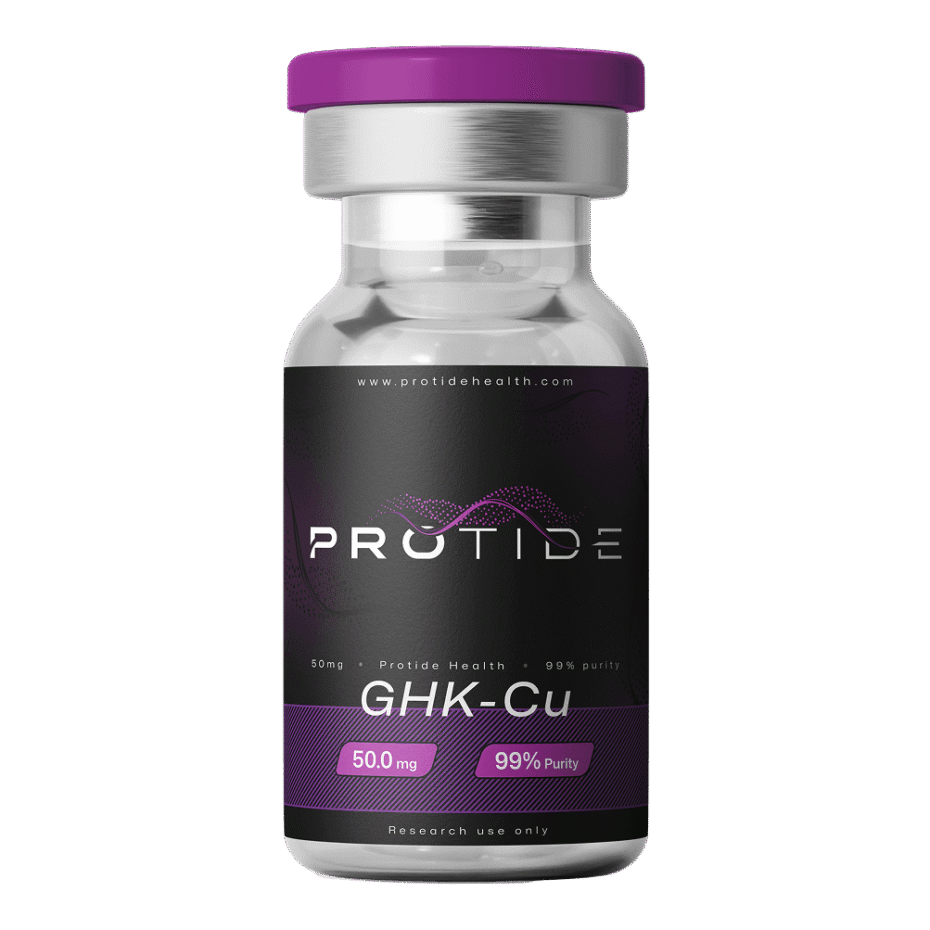
GHK-Cu peptide is a naturally occurring tripeptide complexed with copper(II) ions. Research examines its role in cellular pathways, specifically investigating its influence on extracellular matrix remodeling and cellular senescence.
Specifications and Molecular Mechanisms
GHK-Cu possesses a molecular weight of approximately 340.8 Da when copper-bound. Synthesized strictly for laboratory investigation, it is supplied as a lyophilized powder.
Extracellular Matrix Signaling
Studies investigate the interaction between the peptide and various signaling pathways (PubMed). Preclinical models measure changes in:
-
Collagen and elastin expression in fibroblast cultures
-
Transforming growth factor-beta (TGF-β) signaling cascades
-
Vascular endothelial growth factor (VEGF) modulation
Laboratory Investigation of Copper-Binding Peptides
Researchers across multiple disciplines utilize this compound to examine fundamental biological processes. Animal studies examine its affinity for modulating reactive oxygen species (ROS) and DNA repair mechanisms (PubMed).
Preclinical Models of Tissue Remodeling
In vitro experiments investigate GHK-Cu peptide for its effects on structural proteins. Rodent models measure the following biological markers (PubMed):
-
Fibroblast activation rates in controlled laboratory environments
-
Angiogenesis (new blood vessel formation) markers
-
Expression levels of pro-inflammatory cytokines
Cellular Senescence Research
Laboratory investigation focuses on how this molecule interacts with aging markers in isolated cells. Studies show pathway activation related to SIRT1 and p53 gene expression (PubMed). Human evidence remains highly limited in this area.
Experimental Frameworks and GHK-Cu Peptide Parameters
GHK-Cu peptide applications are confined to controlled laboratory environments. Scientists measure molecular changes using specific assays, with no approved clinical applications existing.
In Vitro and Animal Studies
Typical study designs involve measuring biomarker fluctuations over standard 24 to 72-hour intervals. Preclinical models evaluate (PubMed):
-
Gene expression modulation in neuronal cell cultures
-
Antioxidant enzyme activity in isolated tissue samples
-
Extracellular matrix (ECM) protein deposition rates
Key Takeaways
In summary, GHK-Cu peptide serves as a vital instrument for investigating tissue remodeling, angiogenesis, and senescence pathways in preclinical models. Its investigational status restricts its use entirely to laboratory environments.


Reviews
There are no reviews yet.